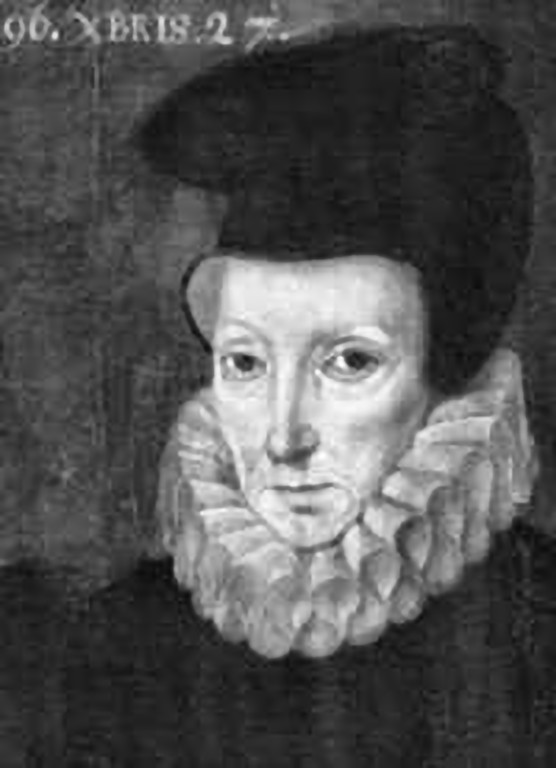
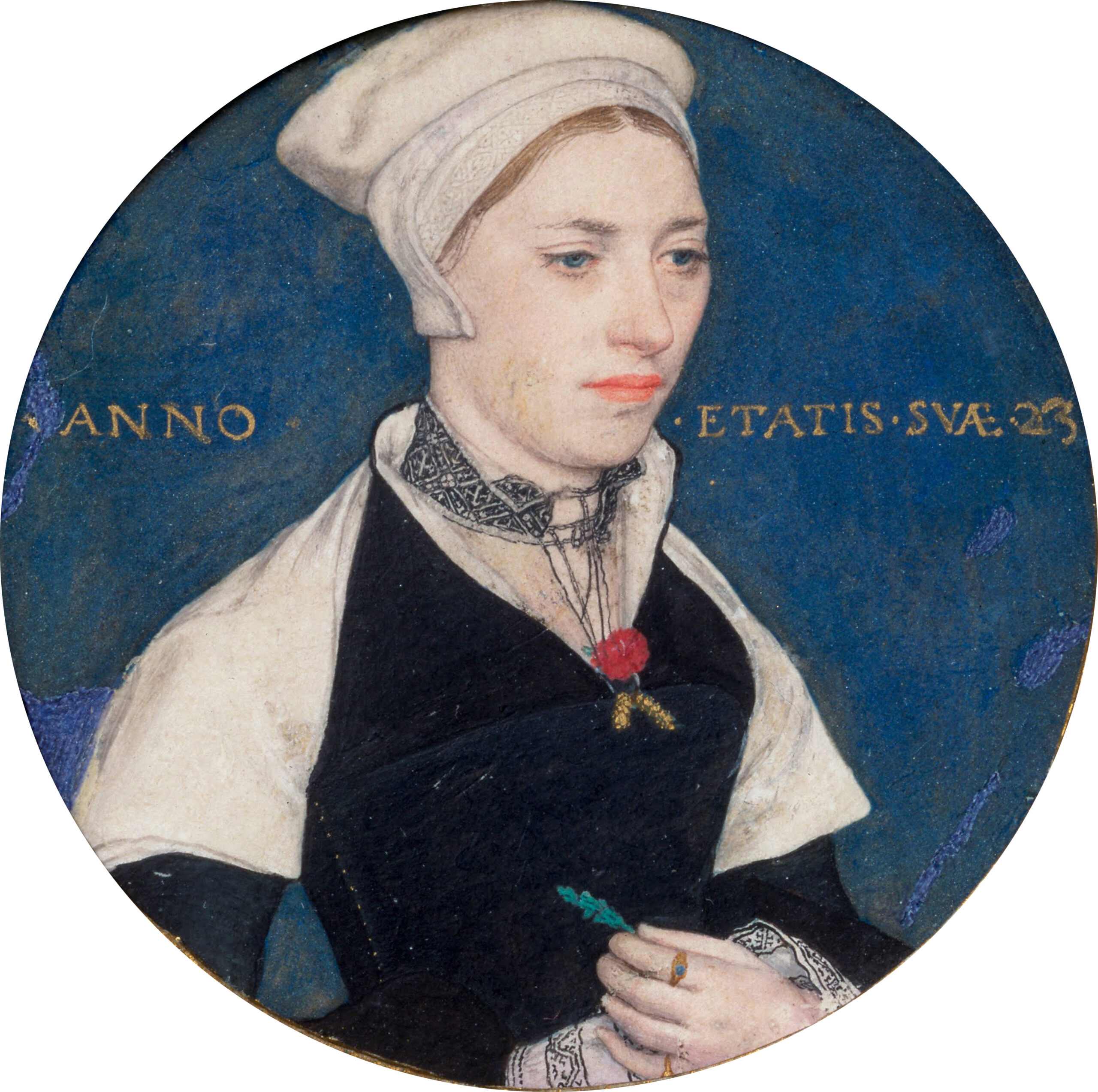
Rose Lok lived to be a very old lady. For a Londoner born in the reign of Henry VIII, to attain the age of eighty-six was in itself an extraordinary achievement. And Rose lived an extraordinary life. She grew up in a house off Cheapside in the heart of Tudor London, one of nineteen children of the King’s own Mercer, William Lok. One of her early memories was of the King inviting himself to dinner. And her later life included not only marriage and children but religious persecution and exile. In her final years she was to write a memoir for her grandchildren.
William Lok was a highly regarded mercer who supplied Henry VIII with the latest and most exclusive in of high-end fabrics and trimmings. All through Rose’s childhood, the family was high in the Royal favour. In 1527, the year after William was granted exclusive rights to import fabric for Court revels – a lucrative acquisition, as the “revels” often took the form of lavishly produced events somewhere between a musical and a drunken party, with specially commissioned costumes and props costing the equivalent of hundreds of thousands of pounds. This was in addition to the money he made in a variety of forms of international trade, including importing wine and exporting beer and leather goods. And the Lok family had been high in the Royal favour for many years; there are records going back to 1498 of purchases from them by Elizabeth of York.
The Lok household in Bow Lane must have been crowded. William married four times, but his nineteen children, of whom twelve survived to adulthood, were all born to his first two wives – the second of whom, Rose’s mother Katherine Cooke, died soon after the birth of her tenth child. The deaths of babies and small children was nothing unusual at this time: according to one estimate, two out of five of all those born did not live to see their fifth birthday. And many people approached marriage with pragmatism. It was common for both women and men to marry several times, often seeking a new partner within weeks of being widowed. William Lok’s third and fourth wives were both widows who had been married twice before – their much-married husband probably felt the need for a wife to preside over his houses and care for his many children.
So even by Tudor standards the Lok family was extensive, as was its influence. By the time of his death William Lok owned twelve properties in London as well as land and farms in the home counties. Most of the men of the extended family became mercers, and several Lok daughters married other members of the livery. And the daughters also worked as silkwomen. At this time it was both acceptable and usual for the women of high-status City families to work. In the case of the Loks, and other mercers, this was in the silk trade. There were as yet no silk weavers in England, but raw silk was imported into the country, and was made up into ribbons and trimmings by silkwomen, who would also sell the finished goods to rich and influential customers. This involved having the entrée to Court, and to be one of the accredited silkwomen to the Queen of the day was a coveted status – and one which in turn conferred privileged access, and with it the capacity to form an insider view about the Queen and her household.
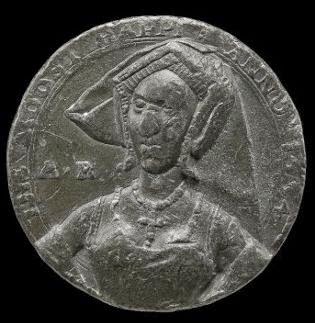
Rose was to claim in her memoir that her father was importing French religious books for Anne Boleyn and her father and brother by the late 1520s. The whole Lok family were interested, and involved, in the reform movement from its earliest days, long before it was legal to possess a copy of the Bible in English, or French either. As with so much else, if you were of high enough status, it was safe to bend the rules – and the Queen in Waiting could do no wrong. William Lok’s stock rose even higher in 1533 when, on a trip to Dunkirk, he dramatically tore down from the church door a poster proclaiming that the Pope had excommunicated King Henry VIII for refusing to take back Catherine of Aragon as his wife. When this story of loyalty in action reached the King’s ears, it meant a Court appointment as Gentleman Usher and a cash reward for William – and the King started to invite himself to dinner.
William Lok was by no means the first Londoner to find himself entertaining Henry VIII unexpectedly. Ever since he escaped his father’s tutelage when he became King at just short of eighteen, Henry VIII had delighted in moving round London semi-unnoticed. Sometimes this took the form of a set-piece entertainment such as when the King and a dozen courtiers turned up in disguise at a party at Wolsey’s London palace. All the guests knew to join in the game that dictated that everyone was speculating about the identity of the magnificent man in the mask, only to be duly amazed when he revealed himself. Sometimes the expedition was less graceful, such as the forays through London arranged by the King’s friend and Groom of the Stool, William Compton, who was also expected to arrange for pretty and accommodating girls to be available to the King at his own London home. And on yet other occasions the mood was that of the friendly and informal sovereign who asked nothing better than to sit down to an impromptu meal with a loyal servant and his family. Alas that Rose did not record in her memoir any details of the visits – although, as a small girl, she may not have been present for much of the time.
What is clear is that William Lok’s London business was extensive. As mercer to both the King and to Anne Boleyn, he was evidently required not only to supply fabric but to arrange for it to be made into clothes. This is suggested by the large bill that was left unpaid at the time of Anne Boleyn’s death. It was usual in the sixteenth century for the nobility to pay for goods several months in arrears, and the Queen was evidently no exception. In the period between the beginning of January and 27th April 1536, Anne had bought goods priced at £124 15s 2d (multiply by around 500 for some idea of modern values). The itemised list includes a sumptuous range of clothes, from a russet velvet gown trimmed with black lamb’s wool to black velvet night gowns (to be worn informally rather than in bed) to carnation satin sleeves, thirteen kirtles, the fabric for eight pairs of black velvet shoes and a number of items for the Princess Elizabeth. The fact that the bills are for clothes and not just fabric suggests that Lok may well have been involved in the making of the clothes. Some items would certainly have been made by the King’s Tailor, but it is also likely that the Loks’ sphere of influence included tailors and seamstresses who did at least some of the cutting and sewing.
Stephen Vaughan, who was a merchant venturer and who was so keen to persuade Anne Boleyn to employ his wife that he provided some free samples of her work – to no recorded avail. Those who were appointed as silkwomen to the Queen were expected to visit her and her ladies regularly with the latest in trimmings, ribbons and tassels, some made by themselves and some imported. The silkwomen were familiar figures, and evidently were often on friendly terms with their Royal customers – and on hand to see and hear what was happening in their households. Twenty years after Anne’s death, at the beginning of the reign of her daughter Elizabeth, some of those whose memories went back far enough made haste to place on record their memories of Anne’s household. And the Loks and their circle certainly contributed a share to the recollection of Anne Boleyn as a serious and devout mistress, who ensured her ladies’ behaviour was exemplary, that they sewed for the poor, and that they read and discussed religious texts over their sewing. At this time there was a concerted effort among Protestant Londoners to rehabilitate the reputation of the woman they regarded as having been largely instrumental in bringing about the English Reformation. John Foxe was to quote Joan Wilkinson, another of Anne’s silkwomen, as a source for the description he includes in his Books of Martyrs of the Queen’s charitable activities and the high standards she set for her household.
And it was at this time that Rose Lok and her husband, another mercer, were able to return to London, having prudently moved to Antwerp during the reign of the Catholic Mary I. They had joined several hundred other Protestant Londoners on the far side of the English Channel, aware that their status and prosperity might not save them from the flames of Smithfield. Rose, her husband and children settled back into London life under Elizabeth I – little is known of her subsequent life except that she lived to be a great-grandmother and revered matriarch. And if Rose’s later years were quiet ones, her son William Hickman took on the role of adventurer, travelling to Russia to the court of Ivan the Terrible, and returning safely to tell his mother the story.