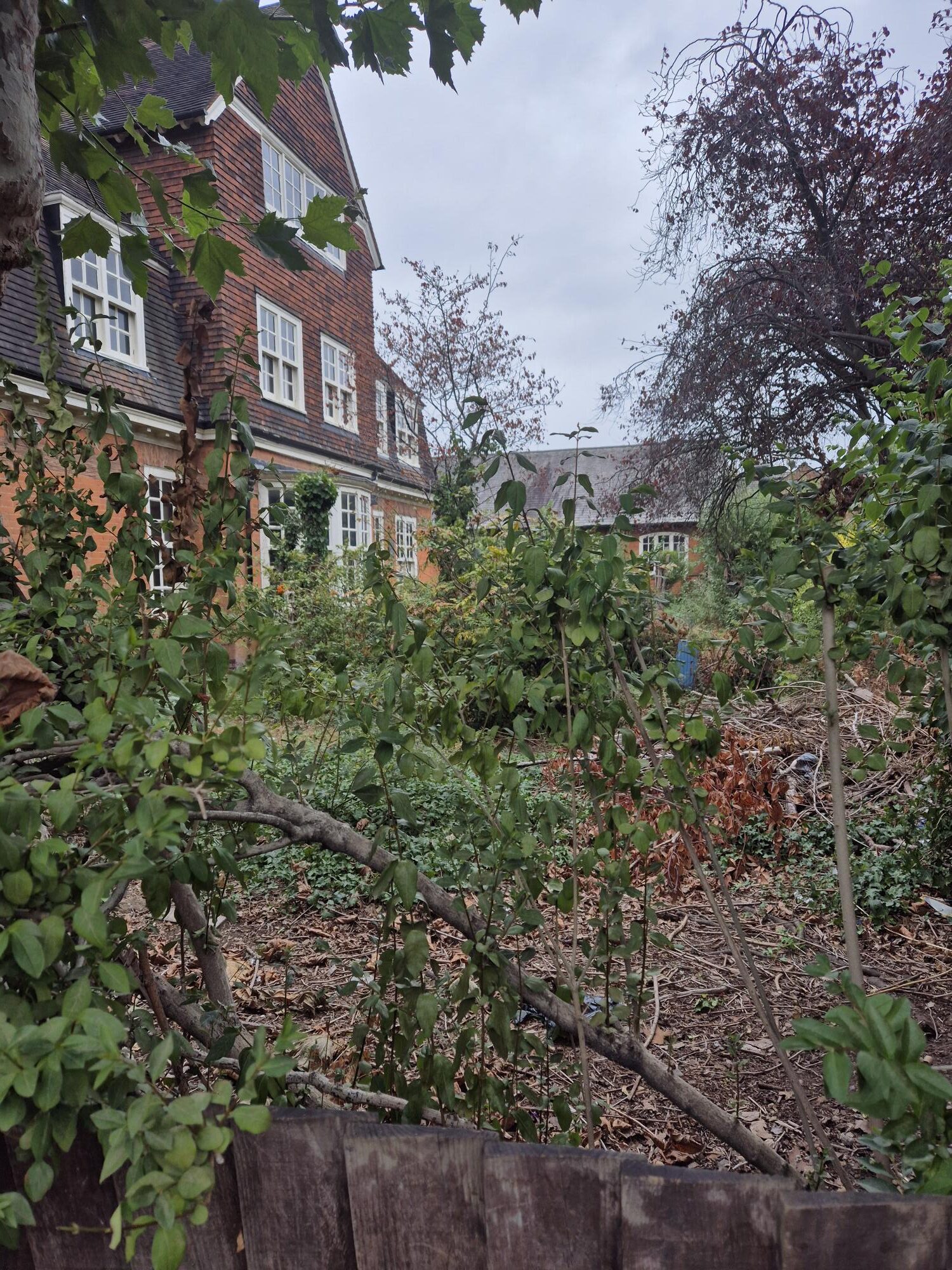
Three years ago, when I first wrote about the Iron Church, now known as the Stafford Hall, the unpretentious structure that served its community before the present St Barnabas Church, Walthamstow was built, the future of church, vicarage, iron church and church hall seemed moderately uncontentious. Life was hard for everyone in the aftermath of the pandemic. But this was a parish and community with not only a Sunday congregation but many other local supporters, users and droppers-in. Dispiriting, then, to witness the outward and visible effects of present uncertainties.
To begin at the beginning: from damp orchards and watercress beds to a hodge-podge of terraced housing, shops and small factories and workshops was a short journey for an inoffensive field in the last quarter of the nineteenth century. For the area between Boundary Road to the south and what is now Walthamstow High Street to the north, the transformation was especially easy as former common land and once-grand gardens went on the market. And some of what was built survived only a few years, vanishing to make way for higher bidders.
But there are a few places and buildings that have survived unexpectedly, sometimes against the odds. One of these is a smallish and outwardly unprepossessing structure, now dignified with the title of “Stafford Hall”. It has been in turn scout hut, dance hall, a school for “mentally handicapped boys”, cinema and photography club, occasional performance space and pop-up pub. But first of all it was a church.
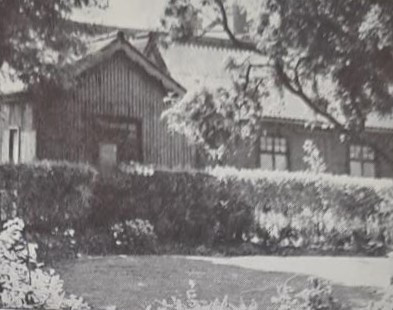
Iron churches were not unusual at the turn of the twentieth century; this one was bought second hand for £40 from Battersea, and cost an additional £70 to move and reconstruct. The plot of land that accommodates it as well as St Barnabas Church next door and its vicarage, its garden and the Foster Hall had been donated by H J Casey, city businessman, property developer and owner of The Priory, a grand house in Forest Road. This was a usual piece of philanthropy at the time – Casey, like many others who were making a second fortune from land, might give away a small patch of their profit to provide the ground for a church for the occupants of the hundreds of new houses. Commercial premises were automatically part of the plan, as entrepreneurs scrambled for shop and workshop space. But churches cost – it was a piece of good luck for this now relatively poor area that there was a millionaire philanthropist down the road.
In fact, though, the first ancestor of St Barnabas church was the parlour of Mrs Elizabeth Tracey of Stafford (now St Barnabas) Road. The Traceys’ must have been a busy place in the 1890s, as not only was it home to Elizabeth, her husband Matthew, an iron moulder and their children but the living room in their small house was often used for choir rehearsals, prayer meetings and a Sunday school. Heartbreakingly but not unusually, Elizabeth had borne ten children, of whom only five survived to adulthood – and this was a moderately prosperous family.
But at the end of the decade the Traceys got their house back. The original plan had been to use the plot opposite as a mission church, as was often done in the case of newly built-up areas. Before the 1870s, the nearest church was St Mary’s, a good twenty-minute walk away, mostly across fields in the days before Queen’s Road was laid out to allow access to the new cemetery, opened in 1872. And, contrary to some assumptions about life in the nineteenth century, by no means everyone went to any kind of religious service as a matter of routine, and certainly not if it meant two longish walks.
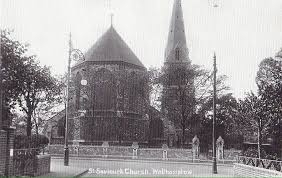
Closer by, Markhouse Road, or rather Lane, was to become the setting of a large and impressive church largely because of the chance of inheritance. Richard Foster was a City merchant and devout Anglican, and was the heir of his uncle, James Foster, who had lived in a house in Markhouse Lane since the 1830s. On his death he left much of his estate to Richard, who offered some of the land to the Church of England. This was the plot that was to become St Saviour’s, built at Foster’s expense. The architect was T F Dolman, whose design was in the thirteenth century style of the height of the Gothic Revival. Over the next thirty years, Foster was to spend the equivalent of tens of million pounds on building churches both in Walthamstow and other newly expanding suburbs.
St Barnabas Church was to be Foster’s final church building project. The “Iron Church” was in operation by 1900 – it was realised at the last moment that there was no font, so the newly appointed churchwarden, a mason by trade, made a wooden font overnight. It was then consecrated by the Bishop of St Albans, and remained in use until the permanent structure was ready. Foster took part in a ceremony to “cut the first sod”; there was a lunch afterwards in the iron church. In his speech, Foster said this last project was a thank offering for a life which had held many blessings. He was to live to see the permanent church completed, but made only a modest contribution towards the hall that is named after him.
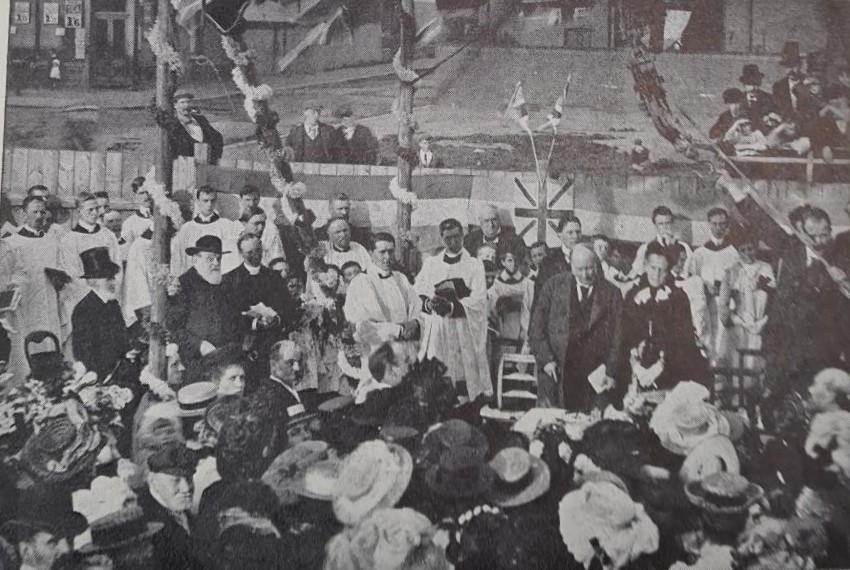
The iron church went on serving as the parish hall for fifteen years after St Barnabas’ Church was completed and the large and elegant vicarage made ready for its first occupants. This was, and is, the grandest house in the neighbourhood, which was a relatively poor one, as it was developed with an eye to housing for the new breed of commuter who travelled on the cheaper workmen’s trains. Rather ironically, one of the first parish magazines, dated February 1905, reports that soup had been made at the Vicarage for the benefit of those who were suffering from “slackness of work”. It was, however, sold for 1d per quart. The recipe is not given.
The original intention had been to take down and sell on the Iron Church and add the plot to the Vicarage garden. But it was eventually repainted and went on to serve as a meeting place and temporary shelter during the Second World War. In 1951 it was leased to Essex County Council “for the training of mentally handicapped boys and men”, and in 1967 it became home to the Walthamstow Amateur Cine Club and, most recently, to a photographic club. By the early 2000s it was cold, in need of repair and most of the furniture was ramshackle. But it was still in use. Meanwhile, next door, while the church escaped the fate of the nearby St James the Greater, demolished in 1960, the years following the Second World War were hard times at St Barbabas.
In recent years the name of Stafford Hall seems to have become official. While it was in continuous use by local clubs and a scout troop, it was less than ideal as a venue, being damp and cold. But after a renewal of local interest and after a coat or two of paint, some repairs and the addition of several sofas, there have been several very popular pop up pubs there, as well as service as a warming room and community shop through two cold winters. It has also been available for meetings and workshops in recent years.
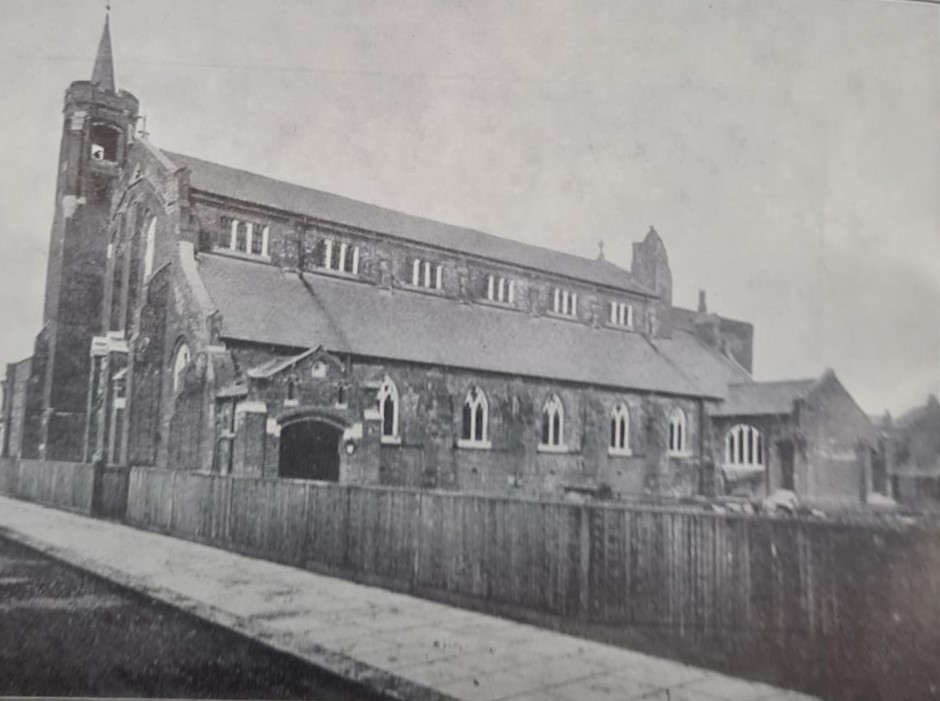
Next door, the vicarage has been home to several succeeding incumbents. One of them, Rev’d Anthony Couchman and his partner Dr Julian Litten, finding their new home run down to the point of dilapidation, spent much time and their own money in restoring house and garden to their former beauty. Although St Barnabas Church escaped sharing the fate of St James the Greater, demolished to make way for a health centre, it and its vicarage had suffered from some years of neglect. When Fr Anthony arrived in 1976, seven people attended his first Sunday service; in 2007, just before his retirement, he preached to a congregation of 123 – his work was with people as well as buildings.
When Anthony and Julian left, it was in the belief that they were passing home as well as church on to their successors. Alas, in the most recent past, the divorced wife of a former vicar was allowed to stay on for several years after a scandalous and highly public break-up. At the time of writing, after her final departure, the vicarage stands empty and the once-lovely garden neglected as, by all accounts, the church hierarchy wrangles over its monetisation. If the reports are true, it is fortunate that a ghostly Richard Foster, surely as generous and kindly in death as in life, is probably unlikely to return to haunt them.